Gastbeitrag: Germany’s Bridge between IPBES and IPCC
Germany’s leadership in data and knowledge management across IPBES and IPCC marks a new phase of collaboration. The focus now shifts toward AI-ready, transparent and trusted global data infrastructures. By Dr. Aidin Niamir.

Germany is currently experiencing a pivotal moment in the development of data and knowledge to support global science and policy. This is evident not only through its hosting of major data centres and its contributions to IPBES and IPCC, but also through its role as home to the IPBES Technical Support Unit for Data and Knowledge Management since 2019, and more recently through its co-chairmanship of the IPCC Task Group on Data during its seventh assessment cycle.
These roles place Germany in a unique position to connect the data and knowledge work of both platforms, which lies at the heart of their assessments. This achievement is not an end in itself, but an opportunity to strengthen the global infrastructure that turns scientific evidence into policy decisions.
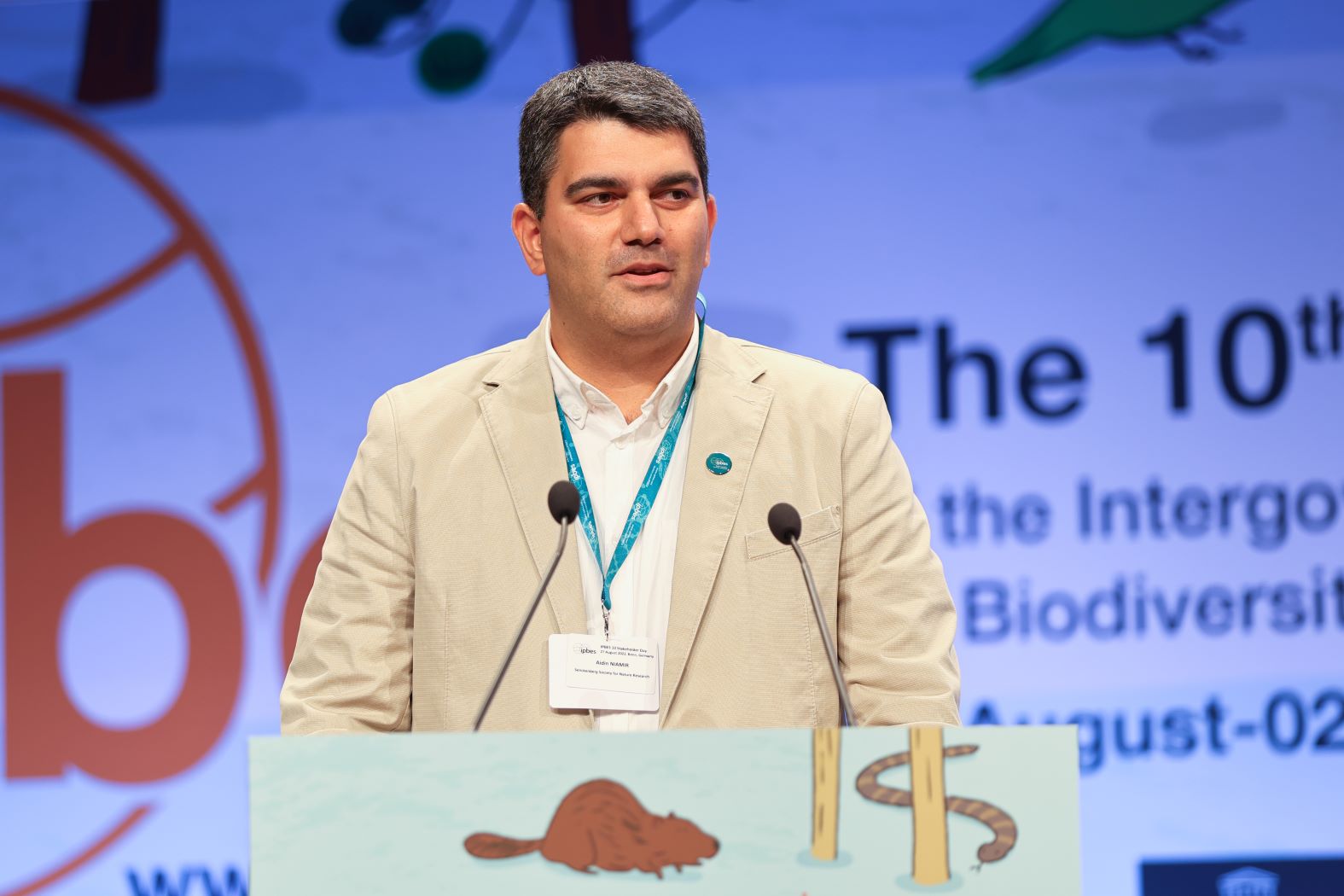
Dr. Aidin Niamir is Head of International Science Policy Unit of Senckenberg – Leibniz Institution for Biodiversity and Earth System Research, Head of IPBES Data and Knowledge Management Technical support unit and Co-Chair of the IPCC Task Group on Data Support for Climate Change Assessments.
IISD/ENB
Institutions such as the Senckenberg demonstrate how research organizations can act as trusted partners within a decentralized network. By providing interoperable services, linking communities, and supporting long-term data stewardship, they help to bridge the gap between policy and society through science. At a time when public trust in information is under pressure, such institutions are essential in providing credible, neutral knowledge.
The challenge ahead is even greater. With the rapid technological changes and growing risks associated with artificial or misleading information, we must build data systems that are fit for the age of artificial intelligence. These systems must combine intelligent tools with transparent, well-documented workflows, all the while protecting the integrity and reproducibility of data.
Artificial intelligence offers powerful ways to discover and connect knowledge, but it also raises questions about bias, accountability and trust. Therefore, building AI literacy among scientists, practitioners and policymakers is crucial for the responsible use of these tools.
Looking ahead, data centers and knowledge hubs should evolve towards decentralized and federated models that balance confidentiality with openness. By doing so, Germany can help both IPBES and IPCC deliver transparent and trustworthy assessments that are ready for an AI-enabled future.